

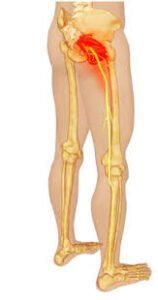
 The piriformis is a small muscle that runs from the sacrum to the upper part of the femur (thigh bone). Its primary role is to help rotate the leg outwards and support hip stability. Although small, it sits close to the sciatic nerve as the nerve travels from the lower back, through the buttock and down the leg.
In some people, increased tension or irritation in the piriformis can place pressure on the sciatic nerve, leading to what is commonly referred to as piriformis syndrome. This is estimated to occur in around 15% of people, depending on individual anatomy. Symptoms typically include pain or tenderness deep in the buttock and may be accompanied by radiating pain, numbness or pins and needles down the back of the leg and sometimes into the calf.
Causes of piriformis syndrome
Piriformis syndrome is often linked to a combination of factors rather than a single cause:
- Low back stiffness or imbalance – altering load through the pelvis and hips
- Weak gluteal muscles and tight hip flexors – increasing demand on the piriformis
- Foot mechanics and gait changes – such as over-pronation
- Overuse – particularly activities involving repeated outward rotation of the thigh
- Prolonged sitting – especially on firm surfaces
- Direct trauma – such as a fall onto the buttock
- Muscle spasm – though the exact reason spasms occur is not always clear
Once symptoms have occurred, piriformis syndrome can recur, particularly with prolonged sitting, over-exercise or insufficient recovery.
Treatment of piriformis syndrome
Management focuses on reducing muscle tension, addressing contributing biomechanical factors and improving load tolerance through the pelvis, hips and lower back.
Common approaches include:
- Heat – applying gentle heat to the buttock can help ease muscle tension
- Exercise and movement – strengthening and stabilising the pelvis and lower back can reduce strain on the piriformis and lower the risk of recurrence
- Stretching – used cautiously, particularly if the muscle is in spasm
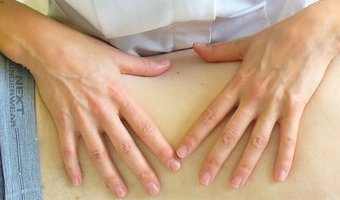
- Hands-on therapy – Osteopathic treatment may include soft tissue techniques, stretching, joint articulation or manipulation and dry needling (modern acupuncture) where appropriate
Assessment is individualised to determine whether symptoms are arising primarily from the piriformis muscle itself or from other contributing structures such as the lower back or hip.
Appointments can be booked via my online diary.